
Precision Frameless Shower Doors
Frameless shower doors are structural glass systems. Wall conditions, layout, glass thickness, and hardware anchoring determine long-term stability and water control. The projects shown here were measured, fabricated, and installed as complete assemblies—accounting for door swing, panel support, and wall variance that cannot be duplicated.
Champion Glass & Mirror Inc. is a licensed C-17 glazing contractor serving Orange County, CA.
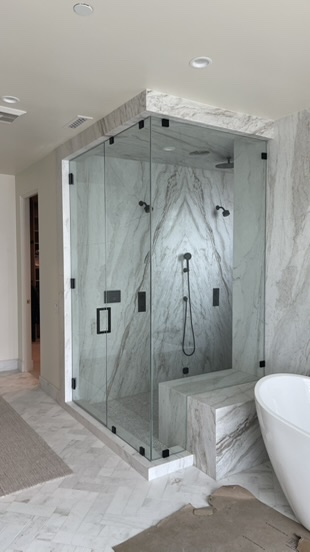
Why Experience Matters?
Most frameless shower issues originate before glass is ordered. Walls that are out of plumb, incorrect hinge placement, or hardware selected without regard to door weight lead to leaks, misalignment, or premature movement. Because tempered glass cannot be modified after fabrication, verification and layout discipline are the primary risk controls.
Call Us (949) 414-9086 just know our team takes every project very seriously for longterm safety and usability.
We care about what we do.
Glass and Hardware Specifications
Glass thickness and hardware are selected based on configuration, span, and anchoring conditions—not standardized defaults.
• Glass thickness can range from: 3/8″ or 1/2″ tempered safety glass, determined by panel size and support strategy
• Hardware support: hinges, channels, headers, or fixed panels used to control movement
• Anchoring: hardware fastened into verified structural backing or reinforced surfaces
• Alignment: consistent reveals and confirmed door swing clearance for daily use
Finishes and styles are selected after structural requirements are established.
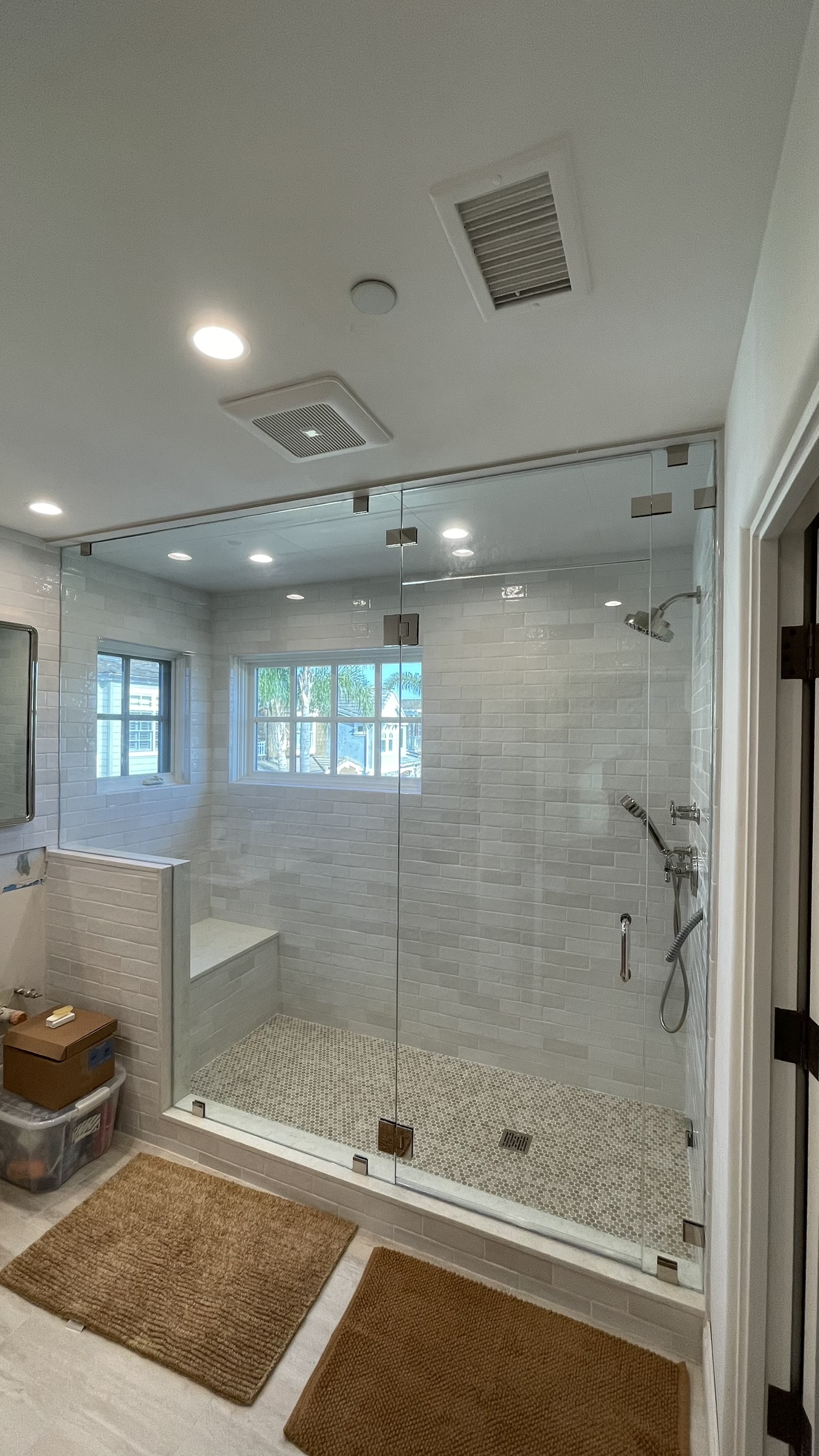
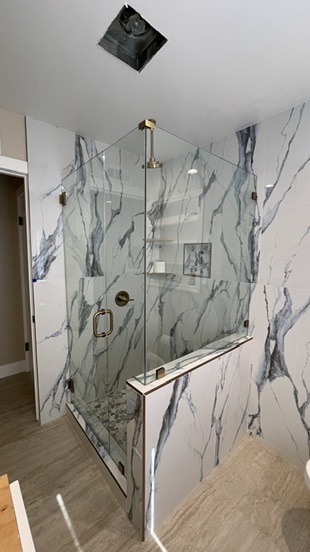
30+ yr Experienced Licensed C-17 Glazing Contractor Serving
All of Orange County, CA
Champion Glass & Mirror Inc. is a Licensed C-17 glazing contractor serving Orange County, including Irvine, Newport Beach, Costa Mesa, Huntington Beach, Yorba Linda, Fullerton and Mission Viejo. Frameless shower installations follow California safety standards and manufacturer specifications for glass handling, mounting, and long-term performance.
Frequency Asked Questions
Most frameless shower doors are built using ⅜-inch or ½-inch tempered safety glass, depending on panel size, height, and structural support. Larger or heavier panels often require thicker glass to maintain rigidity and long-term alignment. Glass selection is based on load, span, and mounting conditions—not appearance alone.
Yes. Frameless glass relies on proper wall blocking and solid anchoring points to support the weight of the panels and hardware. Tile or stone alone is not structural, and insufficient backing is a common cause of movement, misalignment, or premature hardware failure.
Sagging typically results from improper glass thickness, inadequate wall support, or hardware stress rather than the door itself. Frameless systems operate within tight tolerances, and even minor structural movement can affect performance if those tolerances aren’t accounted for during design and installation.
Not always. Frameless systems depend on plumb walls, level curbs, and adequate structural support. In some bathrooms, wall conditions or layout constraints may require design adjustments or alternative configurations to ensure safe and reliable operation.
Frameless shower doors are structural glass systems, not decorative fixtures. Proper planning involves evaluating wall construction, glass weight, hardware load, and long-term movement—not just door size or style.
Frameless glass installations operate with minimal clearances to maintain clean sightlines and proper door function. Because there is no frame to absorb movement, precision in measurement, glass fabrication, and mounting surfaces is critical to avoid binding, gaps, or stress on the glass.
Well-designed and properly supported frameless systems typically require little to no adjustment. Frequent “small fixes” often indicate underlying structural or installation issues rather than normal wear.